REVIEW: 'The Distant Hours' by Kate Morton
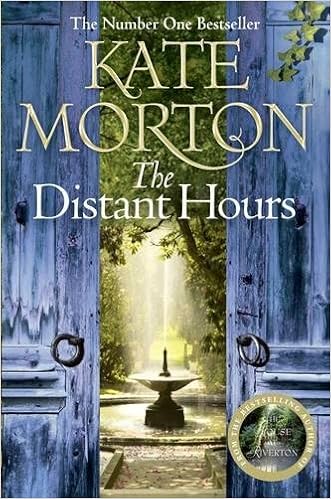 Let me start off by saying that if you have read Morton before and you love her style as much and I do, this offering of The Distant Hours will certainly not disappoint. Sticking with her second generation narrative, and love for self-conscious story telling Morton has stayed true to what she does best.
The Distant Hours follows the protagonist of a young female working in publishing. As she works through her own struggles with work, relationships and love in the present time she begins to look back to how she became this way and those who people usually turn to in their times of need. She looks to her childhood, her mother and her parents relationship.
Naturally for Morton, the relationship between mother and daughter is not strong, and though the mother has hinted at many secrets of a life before her daughter and the husband that our protagonist knows so well began, they remain secrets. We follow the daughter as she navigates the past, travelling to old sisters, even older homes and almost extinct families. The backdrop of world war two in the mother's childhood plays a minor role, and seems mostly used to explain away the conflicts in maintaining realism with such a twisted and constantly shifting story. It works well, and it is only after sitting on the tale for some weeks before writing this review that I noticed potential plot holes and stress points.
I struggle to write much more about the novel without opening myself up to spoilers, so I will tell you a bit of my experience with the characters, and how these differ from previous Morton characters. If you have already read the novel, or do not mind potential spoilers, please read more >>
Otherwise, happy reading!
audiobook // paperback
My personal favorite character in The Distant Hours was possibly that of Thomas Cavill and Raymond Blyth. In a novel so dominated by female characters, it is interesting to see how male affections still introduce emotional extremes and much of the gripping events of Morton's writing. The passing of both characters causing deep emotional distress to those who remained behind, where as the passing or distance of the female characters failed to.
Examples of this theory is present in the passing of Raymond Blyth's first wife and mother to the two older Blyth sisters, compared to the impression left behind on the same night by the death of a much lesser known man: the architect Blyth's wife had an affair with. Where as the fire that took the life of the first Mrs Blyth is little touched on - mostly as an unsettling story among others associated with the castle - the imagery of a man crawling out of a moat and up a tower covered in mud seeps into every corner of Morton's language in how frequently it is referenced. The image is the one which gives 'Saffy' Blyth the nightmares that inspire the best selling novel her father writes (The True History of the Mud Man) which not only revamps the Blyth family fortune but also maintains it, and connects our protagonist of Edith Birchill, her father to the events at the castle. In a stark comparison, Mrs Blyth's severe scalding that night lead to simplistic descriptions of further bodily burning and quick suicide by falling from a great height, swiftly contributed to mental discomfort. Though - obviously - dreadful, completely ineffectual to the tale at all.
Raymond Blyth similarly pulls the strings of action for the tale with little activity directly from himself.
Comments
Post a Comment